
A Visual Primer on the World Health Organization
by D. Joy Riley, M.D., M.A.
Executive Director

The World Health Organization (WHO) arose in the aftermath of WW II. Its aim as a global organization was sound “health” for everyone, whatever his/her socioeconomic position. The word health was wide-ranging in its definition: “Health is a state of complete physical, mental and social well-being and not merely the absence of disease or infirmity.”
First Director-General of the WHO:
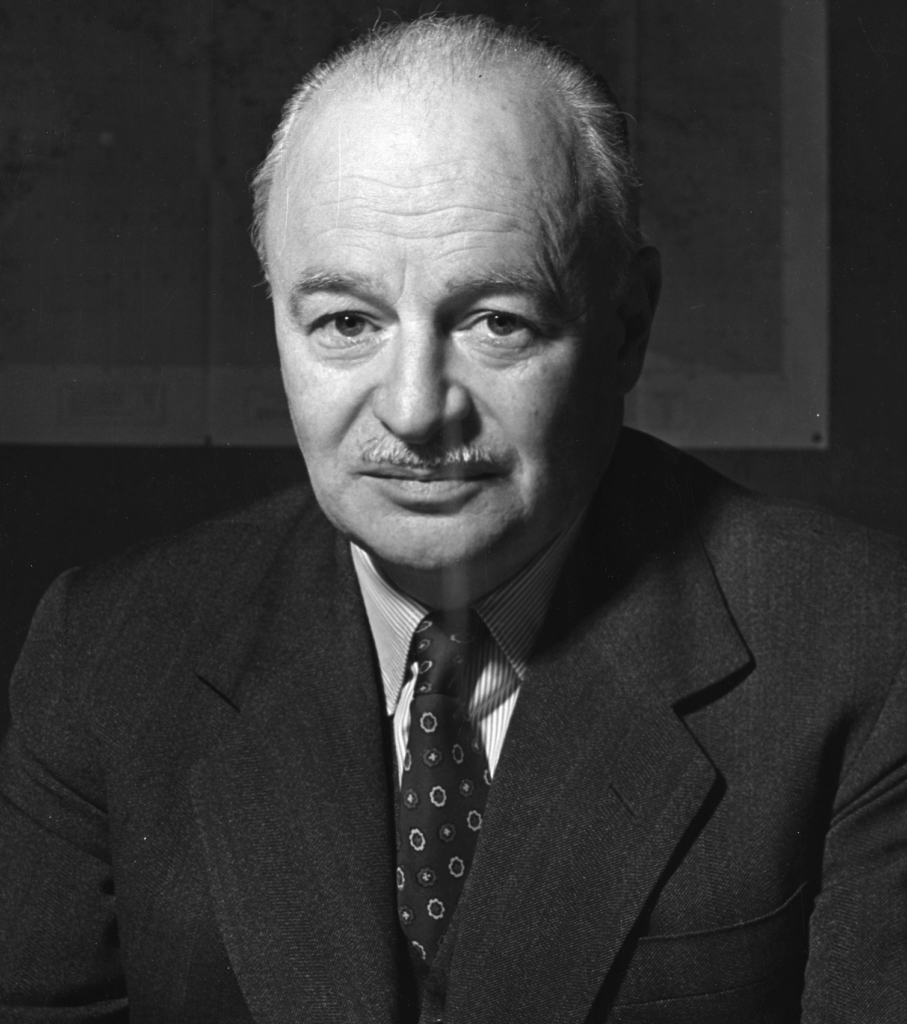
George Brock Chisholm
George Brock Chisholm, a Canadian, served his country during WWI. After returning home, he trained in medicine and then Freudian psychiatry. He advanced to become the first Director General of the WHO, and it was his definition of health that became part of the WHO’s Charter. According to Canadian historian and author, Michael Bliss, “A director general who once commented that ‘one cultural anthropologist is worth more than 100 malaria teams’ was not well positioned to be in the forefront of the struggle, which was managed by trained epidemiologists and public health professionals. Nor did Chisholm’s well-known hostility to traditional religious beliefs or his support of sterilization of the unfit and family planning endear him or the WHO to the Roman Catholic church.”
WHO Directors-General
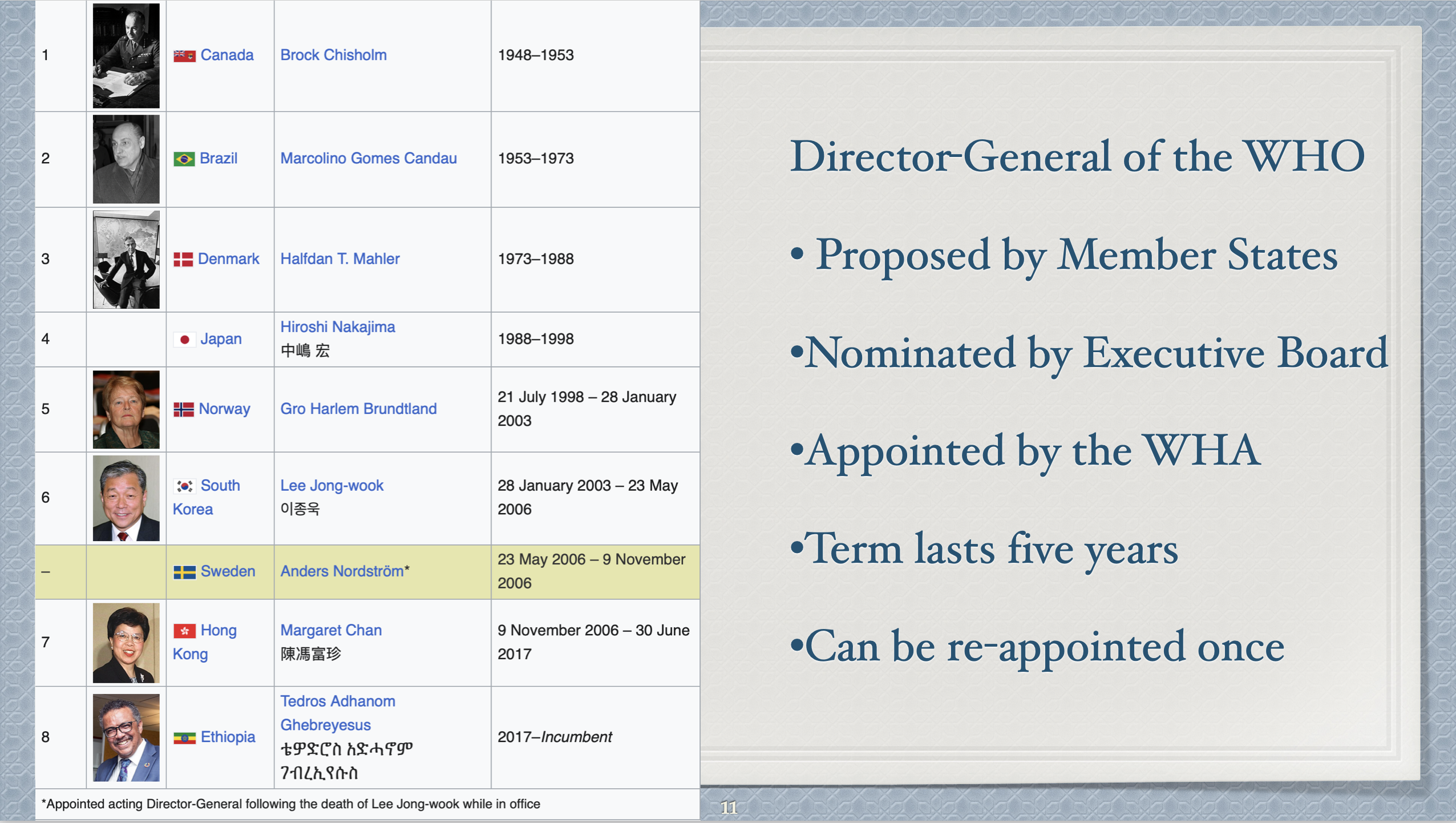
To date, there have been eight WHO Directors-General appointed (with one other interim). Tedros Adhanom Ghebreyesus, the current Director-General in his second term, is one of only two non-physicians to head the organization.
WHO Funding
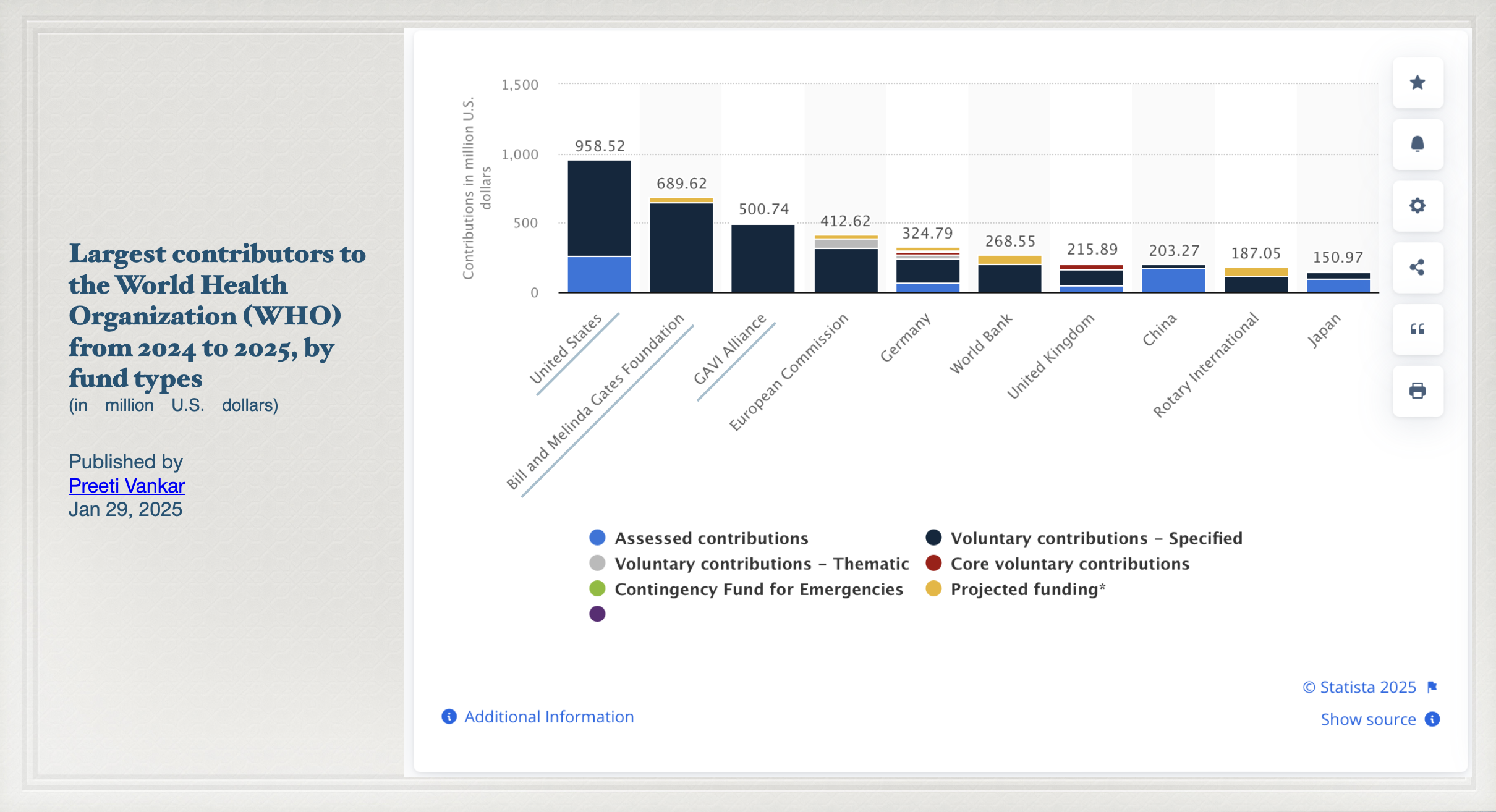
The WHO has a biennial budget. “In 2024-2025, the United States was the largest contributor to the World Health Organization (WHO), contributing around 958 million U.S. dollars. The majority of these contributions came in the form of voluntary contributions, accounting for almost 698 million dollars, compared to 261 million dollars in assessed contributions. Assessed contributions are a countries’ membership dues for being a member of the WHO and are a percentage of the country’s gross domestic product. However, the majority of the WHO’s funding comes from voluntary contributions from member states and other United Nations organizations, intergovernmental organizations, and philanthropic foundations such as the Bill and Melinda Gates Foundation.” (Preeti Vankar)
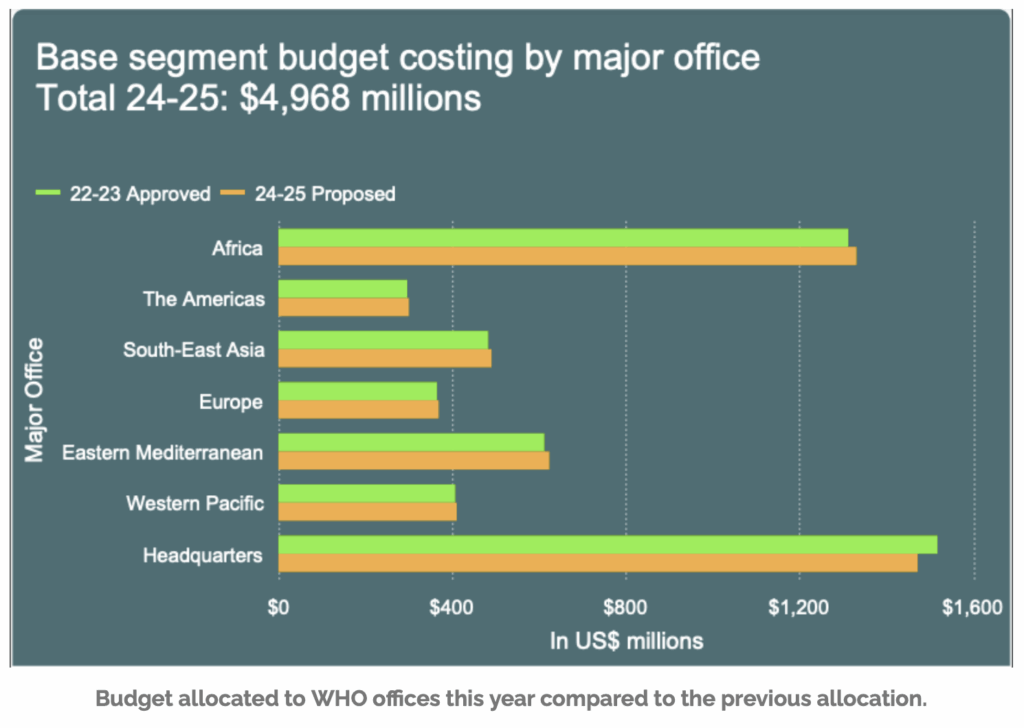
Budget Allocations
It is no surprise that Africa would receive the greatest portion of funds compared to the rest of the world. But why, one should certainly ask, should the WHO Headquarters receive even more than Africa? The monies retained at the WHO headquarters do not provide medical care. Rather, the funds are used for “scientific research, coordination and compilation of global evidence,” according to The Conversation.
Megha Kaveri, of Health Policy Watch, appropriately writes, “The practice of complete disclosure of information on expenditures of member states to member states in order to ensure transparency is not only indispensable, but also something customarily adopted by the UN agencies, and it is high time the WHO follows this path.”