

D. Joy Riley, M.D., M.A.
Executive Director
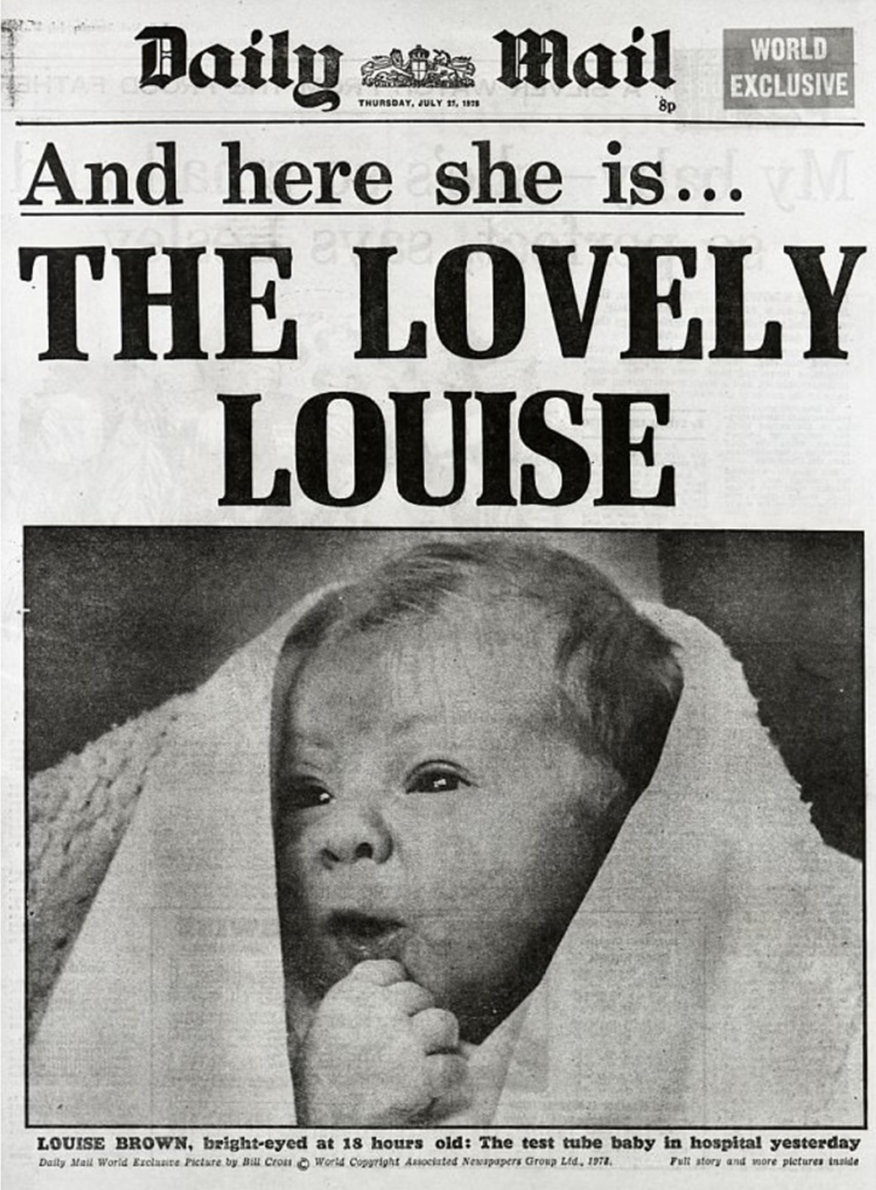
The first successful in vitro (in glass) fertilization (IVF) resulted in the birth of Louise Joy Brown in 1978 in England. Here is a brief account of that event.
Cambridge embryologist Robert Edwards gave a frank interview with The Times‘ reporter Anjana Ahjuga 25 years after the birth of Louise Brown. Edwards said, “The Vatican called Louise’s birth ‘an event that can have very grave consequences for humanity’ because it divorced the conjugal sexual act from procreation.” Edwards is quoted further:
It was a fantastic achievement, but it was about more than infertility,” says
Edwards, who rarely gives interviews but, when he does, delights in
speaking his mind. “It was also about issues like stem cells and the ethics
of human conception. I wanted to find out exactly who was in charge,
whether it was God Himself or whether it was scientists in the laboratory.”
And what did he conclude? “It was us,” he smiles triumphantly.
The first U.S. birth via IVF occurred in 1981.
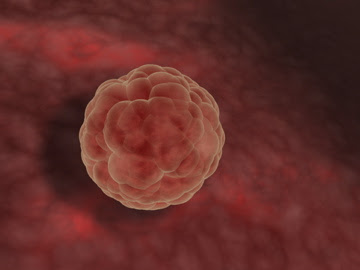
The early human embryo (image above courtesy of St. Max Worldwide) is just that: a very small embryonic human. When properly nurtured in appropriate surroundings, it matures into a fetus, then newborn, and on through subsequent stages to adulthood, barring a shortened lifespan from a variety of causes. This embryo does not become a cat or a dog, or any other species; it is human.

The British Parliament asked philosopher Mary Warnock to chair a committee that would advise the law-making body about the new technology of assisted reproduction. The deliberations were published in the 1985 book, A Question of Life. The Warnock Committee considered not only IVF, but human cloning and a host of other possible uses of embryos. One of their utilitarian conclusions was
. .the question was not, as is often suggested, whether the embryo was
alive and human, or whether, if implanted, it might eventually become a full
human being. We conceded that all these things were true. We nevertheless
argued that, in practical terms, a collection of four or sixteen cells was so
different from a full human being, from a new human baby or a fully formed
human foetus, that it might quite legitimately be treated differently. Specifically we
argued that, unlike a full human being, it might legitimately be used as a means
to an end that was good for other humans, both now and in the future. (xiv)
Sir John Peel countered the Warnock Committee’s conclusions thusly:
When Louise Brown was born a few years ago, a child conceived as the result of
the fertilisation of her mother’s egg by her father’s sperm in vitro in the laboratory,
the general public as well as the medical professions hailed it as a scientific
medical triumph. With thought focused on the plight of the infertile couple, little
thought was given to the potential dangers that might result, any more than
thoughts of the atomic bomb penetrated people’s minds when the atom was first
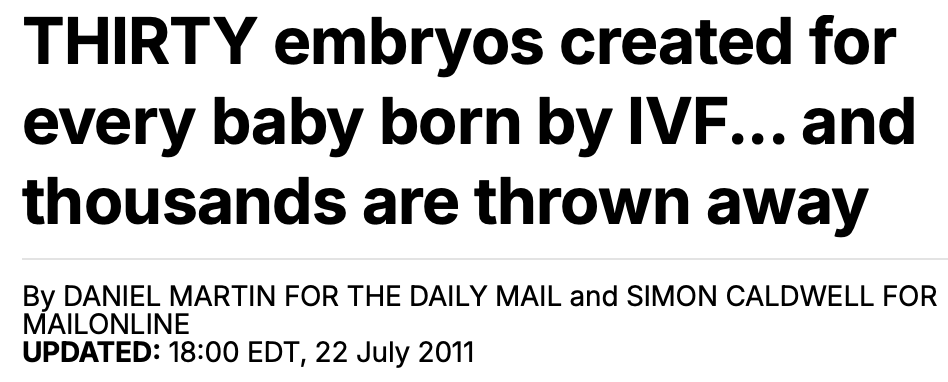
By 2011, the data in Britain for the preceding 20 years were reported thusly:
The figures show that 3,144,386 embryos have been created in UK laboratories
since the passage of the 1991 Human Fertilisation and Embryology Act. A total of
1,455,832 embryos were discarded in the course of treatment, 101,605 were
given for research in destructive experiments, and 764,311 were frozen for later
use.
Indeed, “fewer than 100,000 have been successfully implanted into women to result in live births in that period.” Note this is less that those “given for research” during the same time period.
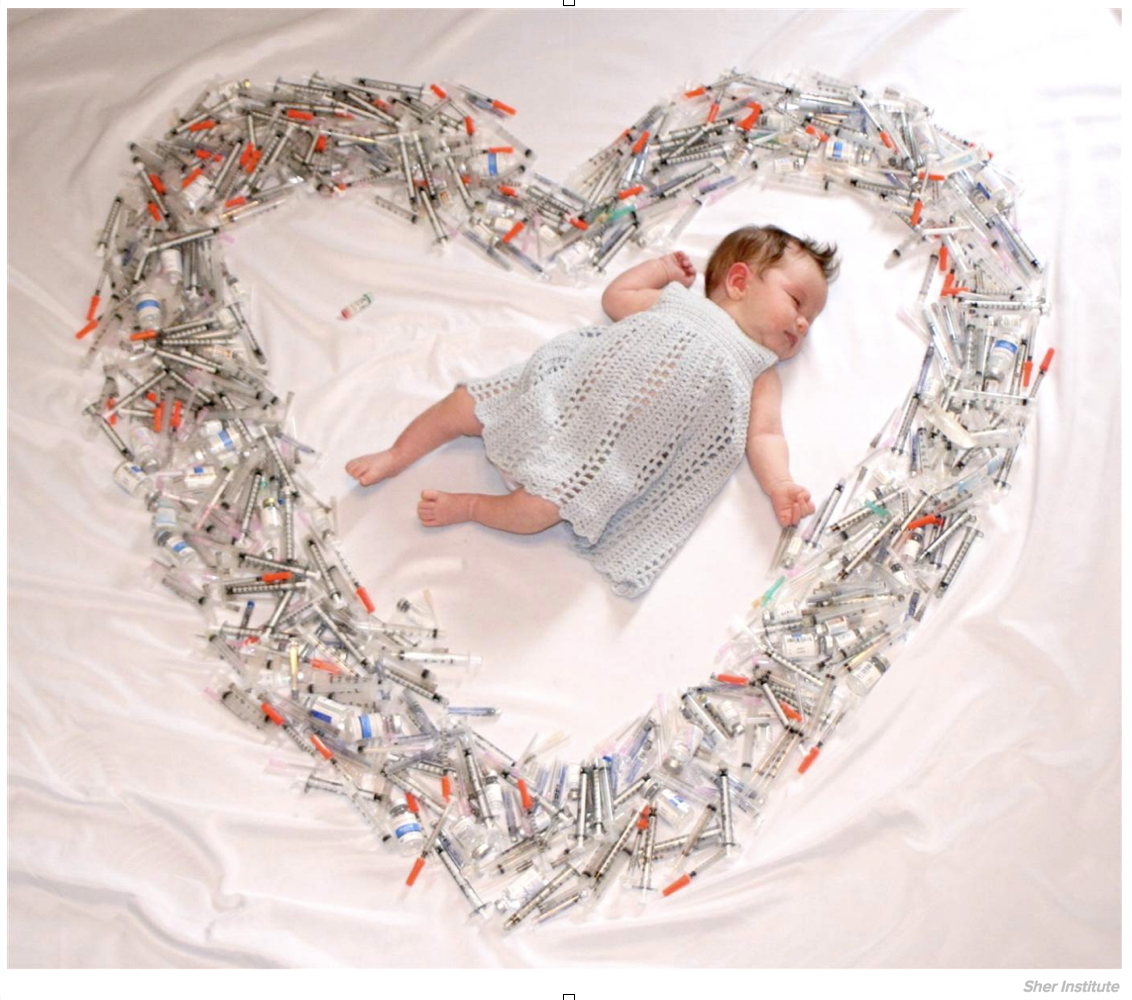
Debating IVF has suddenly become timely. Is IVF a right? How should it be funded? There are many opinions, some of which are captured in this report. Perhaps those leaders in the culture — political or otherwise — should first consider some important questions.
1) If IVF is a right, for whom is it a right? Married couples? Single individuals? Persons previously convicted of child endangerment or abuse (including sexual)?
2) Who has the responsibility for fulfilling such a right? Can anyone or any entity truly guarantee a child to someone(s)?
3) If the State pays for the IVF process, to whom do the children belong? If there are excess embryos, to whom do these belong?
4) Is it ethical to discard or freeze embryonic humans, so-called “excess embryos”?
5) If the state intends to pay for IVF, is the state willing to assume oversight of currently unregulated IVF clinics?